
Capture the complete identity.
Send the complete manufacturer reference, including suffixes, together with the quantity and a clear description of the application. A partial code can leave important differences unresolved.
If the original device is obsolete or unavailable, identify which functions must be retained and whether a proposed alternative can be reviewed.
Match the details that matter.
Different component families need different selection information. Use the existing device and approved project requirements as the starting point.
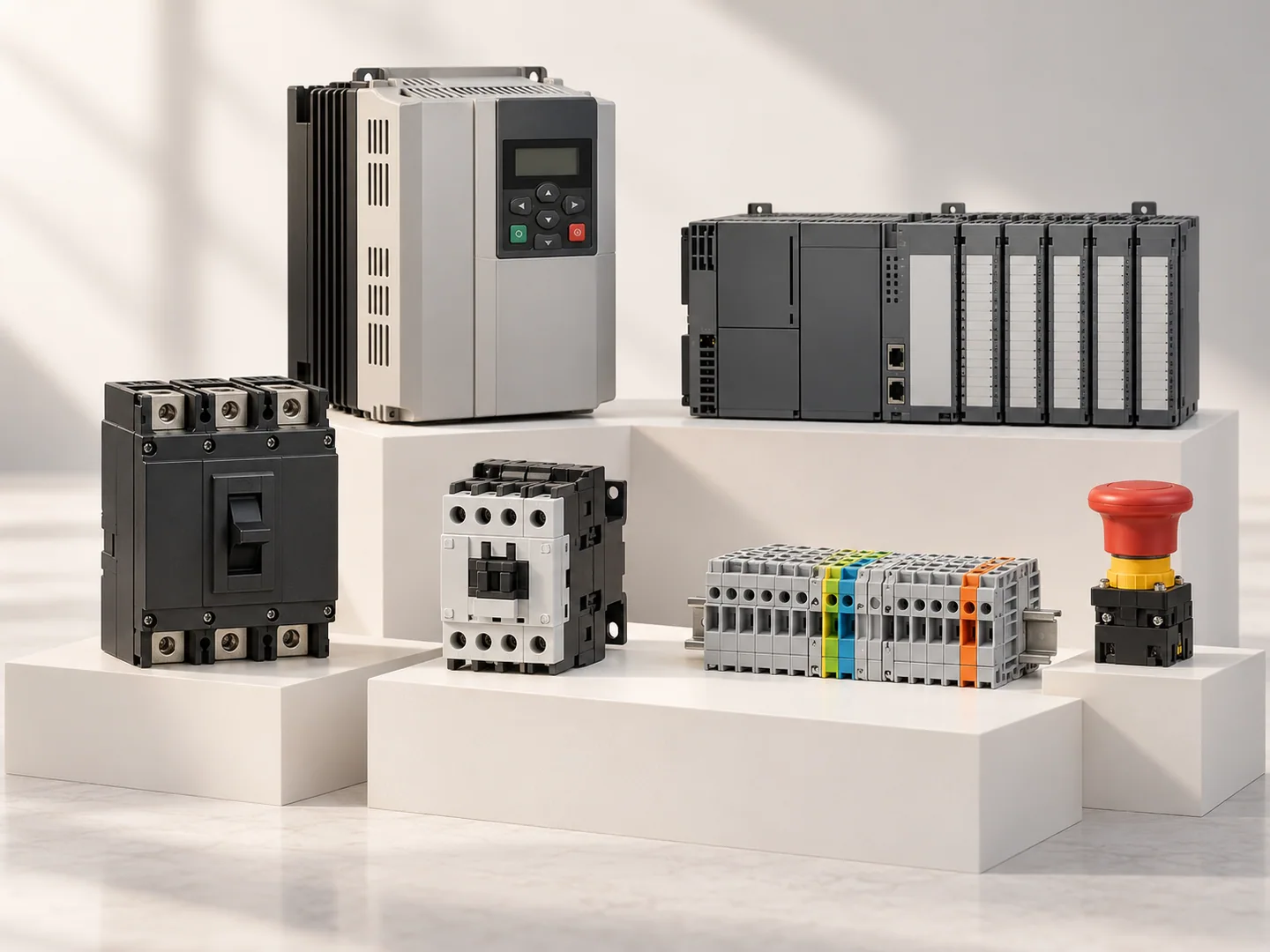
- Breakers: poles, voltage, frame and trip ratings, breaking capacity, trip unit and accessories.
- Contactors: load duty, operating current, coil voltage and auxiliary contacts.
- Drives: motor data, supply, overload duty, enclosure and communications.
- PLC and HMI: full order code, hardware and software versions, I/O and interfaces.
- Capacitor-bank parts: kvar at rated voltage, frequency and any detuning requirements.
Confirm the replacement as a system.
Electrical ratings are only part of compatibility. Dimensions, mounting, terminals, accessories, configuration and protective coordination can all matter. For automation equipment, replacing hardware may also require an engineering change and a controlled functional test.
Record proposed substitutions in the quotation for approval. Confirm lead time and documentation before agreeing the work or supply.
This is an overview for planning and enquiries. Equipment-specific work follows the applicable manufacturer documentation and approved site procedures.